How to Manage Allocated Seating for a School Concert
A practical guide to using allocated seating for school concerts, plays and prize-giving events, from seating plans to parent seat selection.
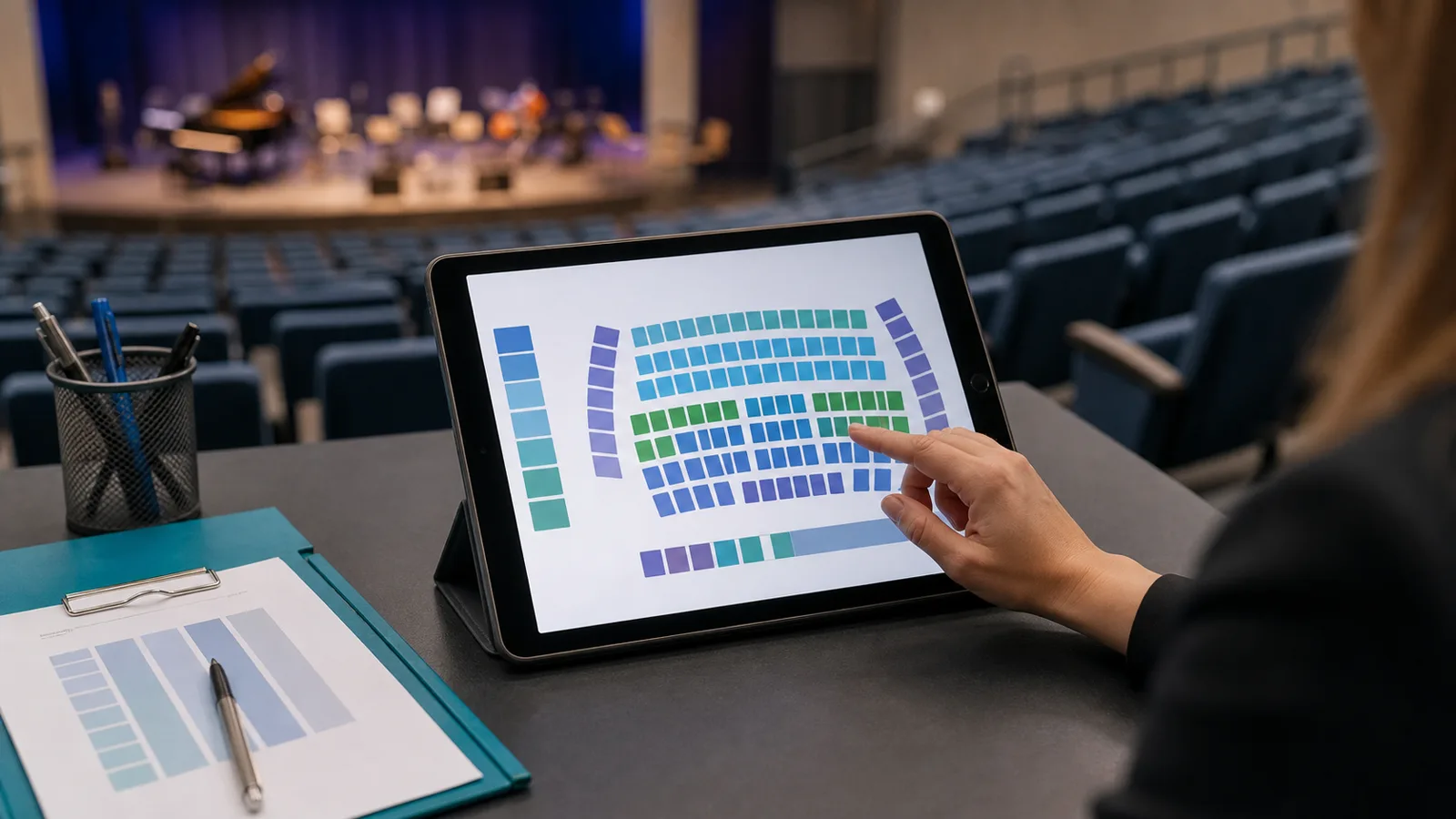
How to Manage Allocated Seating for a School Concert
Allocated seating can make a school concert feel more organised, but only if the seating plan is set up properly before tickets go on sale.
Without a clear plan, staff may end up managing seat requests manually, blocking seats on paper, moving families around and answering the same questions again and again.
With the right setup, parents can choose seats online and the school can see what is still available.
When schools should use allocated seating
Allocated seating is useful when:
- The venue has fixed chairs or rows.
- Parents care where they sit.
- The school needs to reserve VIP or staff seats.
- There are multiple sections in the hall.
- The event may sell out.
- Families want to sit together.
School concerts, plays, revues, choir evenings and prize-giving events are common examples.
For casual events where people can stand or sit anywhere, general admission may be simpler.
Start with the real venue layout
The seating plan should match the real venue as closely as possible. Before building it, confirm:
- Number of sections
- Number of rows
- Seats per row
- Stage position
- Aisles and entrances
- Blocked seats
- Wheelchair or accessibility areas
- VIP or reserved sections
If the digital layout does not match the venue, gate and usher teams will struggle on event day.
Decide how seats should be named
Seat labels need to make sense to parents and staff. A simple structure is usually best:
- Section A, Row 1, Seat 1
- Section B, Row 4, Seat 12
- Balcony, Row 2, Seat 5
Avoid labels that only the event organiser understands. The person checking tickets at the door must also understand them.
Block seats before sales open
Most school concerts have seats that should not be sold. These may include:
- Principal or VIP seats
- Staff seats
- Sound desk area
- Camera or media seats
- Accessibility spaces
- Seats with poor visibility
- Seats held for performers' families
Block these before the event is published. Changing reserved seats after parents have booked can create unnecessary conflict.
Let parents choose seats online
The biggest benefit of allocated seating is parent choice. Parents can see available seats, choose where they want to sit, and book without asking staff to reserve places manually.
This helps reduce:
- WhatsApp seat requests
- Double bookings
- Manual seating spreadsheets
- Last-minute seating arguments
- Confusion at the door
Use sessions for multiple performances
If the concert has more than one performance, each performance needs its own seat availability.
A seat sold for Friday evening should not automatically be sold for Saturday afternoon. Treat each performance as its own session so the school can track capacity correctly.
Keep the seating policy clear
Parents should understand:
- Whether seats are reserved or general admission
- Whether tickets can be moved after booking
- Whether children need their own seats
- Whether there are accessibility options
- What ticket they must show at the door
Clear wording prevents many support messages.
Prepare ushers and gate staff
Allocated seating does not end when tickets are sold. On event day, staff need to help people find the right seats.
Before doors open, brief the team on:
- Venue sections
- Row labels
- Entrance flow
- Reserved seats
- How to read seat details on a ticket
- What to do if someone sits in the wrong seat
QR ticket scanning can confirm entry, but ushers still help the room work smoothly.
Common mistakes to avoid
Avoid these seating problems:
- Publishing the event before the venue layout is checked
- Forgetting to block VIP seats
- Using confusing seat labels
- Changing the layout after tickets are sold
- Creating one seat map for multiple performances without session control
- Not briefing gate staff on the seating structure
Allocated seating works best when the setup is stable before parents start booking.
Final thought
Allocated seating helps schools run smoother concerts because it gives parents clarity and gives staff control. The key is to build the seating plan carefully, reserve the right seats early and make the booking process easy to understand.
SchoolTix helps South African schools create custom venue layouts, sell reserved seats online and scan QR tickets at school concerts, plays and other seated events.