Why Manual Ticket Sales Are Failing South African Schools
Manual ticket sales at South African schools are leaving working parents behind. Discover the real risks — and why it's time schools moved online.
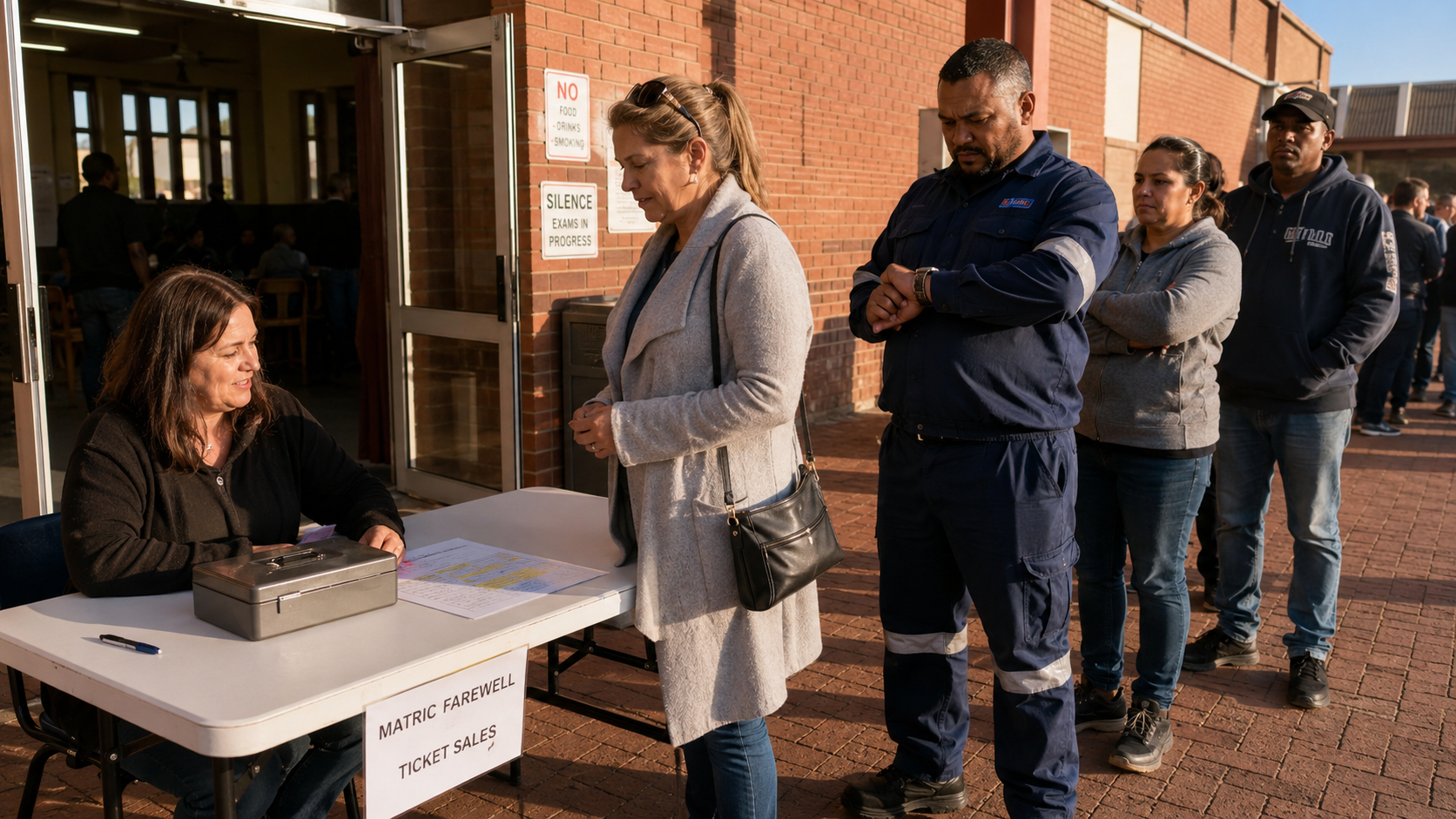
Why Manual Ticket Sales Are Failing South African Schools — And the Parents Who Love Their Kids
Published: June 2026 | Category: School Event Management | Reading time: 5 min
It's Thursday afternoon. The school newsletter lands in your inbox and your stomach sinks a little. The year-end concert is in three weeks, and tickets go on sale tomorrow morning — at the school office, cash only, between 07:30 and 08:30.
You have a meeting at 08:00.
You already know how this ends.
The Reality of Manual Ticket Sales in South African Schools
For decades, the scene has played out at schools across the country in exactly the same way. A table is set up near the admin office. A teacher or parent volunteer sits behind it with a cashbox, a seating chart drawn on an A4 sheet, and a felt-tip pen. Parents queue. Cash is counted. Seats are circled. Tickets — sometimes hand-written, sometimes printed on coloured card — are handed over.
It works. Until it doesn't.
The truth is that manual ticket sales were designed for a simpler time, when most families had one parent who could be at the school gate every morning, when events were small, and when "good enough" was good enough. In 2026, they are a source of real stress — for school administrators, for parents, and for the families who are quietly, consistently left behind.
The Problem Nobody Talks About: The Mommy Club Advantage
Here is what everyone knows but few schools say out loud: the parents who buy tickets first are almost always the same parents.
They are the ones who can arrive at 07:30. The ones whose work schedules are flexible, or who don't have to clock in. The ones who are already at the school for drop-off. The ones who have the right connections and hear about events early, before the newsletter even goes out.
This informal group — affectionately, sometimes bitterly, known as "the mommy club" — doesn't do anything wrong. They show up, and showing up gets rewarded with the best seats in the house: front rows at the concert, premium spots at the prize-giving, prime tables at the gala dinner.
Meanwhile, the parent who works a 7-to-4 shift at a factory or warehouse, the single mother who takes two taxis to get to work, the father who simply cannot ask his boss for an hour off every time the school needs something — these parents repeatedly miss out. Not because they care less. Because the system isn't built for them.
The Real Risks of Handling Cash at School Events
Beyond fairness, there is a more serious conversation that school governing bodies and principals need to have: cash is a liability.
Every time a school sells tickets manually, the following risks are in play:
1. Theft and Loss
Cash collected at the school office or at the gate sits in a box, often for hours or days before it is banked. It changes hands multiple times — volunteer to teacher to administrator to principal. The more hands involved, the greater the risk of loss, whether accidental or otherwise. Schools in South Africa have reported incidents of cash going missing after events, with no paper trail to investigate.
2. Counting Errors and Reconciliation Nightmares
When the concert is over and the adrenaline has worn off, someone has to count the money. Manual counts are prone to human error — especially when multiple people have been handling sales. Totals don't reconcile with the seating chart. Complaints come in from parents who paid but weren't marked off. The volunteer who ran the table can't be reached. Hours are spent trying to reconstruct what happened.
3. No Audit Trail
With cash, there is no reliable record of who paid, when, and for which seat. If a parent disputes their ticket, or a seat is accidentally sold twice, there is no system to fall back on. The school is left relying on memory, handwritten notes, and goodwill — none of which hold up well under pressure.
4. Gate Fraud and Duplicate Tickets
Printed paper tickets with no unique identifier can be photocopied. A family member hands their ticket to a friend "just to get in and look." Someone buys a ticket, scans it in with their phone camera, and then hands the original to someone else. Without a digital verification system, there is no way to catch this at the gate, and no way to know it happened afterwards.
5. Staff and Volunteer Burnout
Managing manual ticket sales is not a small job. It requires someone to be physically present, often for days, to take cash and manage a seating plan by hand. It distracts teachers from teaching and admin staff from their actual responsibilities. Volunteers give up weekends and free periods. And for every event — the concert, the play, the sports day, the matric dance, the prize-giving — it happens all over again.
What It Costs Working Parents
South Africa has one of the most complex working environments in the world. Many parents work long hours in jobs where taking time off — even an hour — requires paperwork, has financial consequences, or simply isn't possible without jeopardising their employment.
Consider what manual ticket sales ask of these parents:
- Leave work during business hours to travel to the school
- Pay for transport to make the trip specifically for this purpose
- Carry cash — an increasingly inconvenient requirement in an era of card payments and mobile banking
- Hope tickets aren't sold out by the time they arrive
- Repeat this process for every event, every term
For families in lower-income brackets, each one of these friction points is a real barrier. The result is that the parents who have the least flexibility end up with the worst seats — or no seats at all — to watch their children perform, receive an award, or graduate. That is not a small thing. These are moments that matter, and the system is currently designed in a way that distributes access to those moments unequally.
The Quiet Frustration Building in School Communities
Talk to parents at almost any South African school and you will hear versions of the same story. The frustration is real, it is widespread, and — importantly — it is growing.
Parents are accustomed to buying concert tickets on their phone at midnight. They book restaurant tables, order groceries, and pay school fees through apps. When their child's school asks them to arrive in person with cash before 08:00 on a weekday, the contrast feels jarring. Some parents comply. Many don't manage to. Some have simply stopped trying, and that quiet withdrawal from school events is a loss for the whole community.
Schools invest enormous effort in putting on events that celebrate their learners. It is a shame when the ticket sales process undermines that effort before the curtain even opens.
There Is a Better Way
The good news is that this problem is entirely solvable. Schools don't need to overhaul their entire administration system to fix their ticketing. They need a platform that:
- Lets parents buy tickets online, from their phone, at any hour of the day or night
- Handles allocated seating digitally, so parents can see the venue and choose their own seats
- Issues QR code tickets that can be scanned at the gate, eliminating fraud and queues
- Removes cash from the equation entirely, reducing risk and administrative burden
- Creates a fair, first-come-first-served digital queue — so the parent who buys at midnight is on equal footing with the one who arrives at 07:30
When ticket sales move online, the mommy club advantage disappears. The working parent who can't get to the school office can still secure front-row seats. The school administrator gets a clean sales report with no cash to count. The teacher at the gate scans a phone screen and waves families through in seconds.
This is what SchoolTix was built for. A simple, affordable online ticketing platform designed specifically for South African schools — because your school events deserve better than a cashbox and a felt-tip pen.
The Bottom Line
Manual ticket sales are not just inconvenient. They are unfair to working parents, risky for school finances, and exhausting for the staff and volunteers who run them. In a country as diverse as South Africa — where parents have vastly different work situations, transport access, and time availability — the school community deserves a ticketing system that works for everyone, not just those who can show up first.
The best seat in the house should go to the parent who clicks fastest, not the one who got there first.
SchoolTix is an online ticketing platform built for South African schools. We help schools sell tickets online, manage allocated seating, scan QR codes at the gate, and leave the cashbox at home. [Get in touch to find out how it works.]